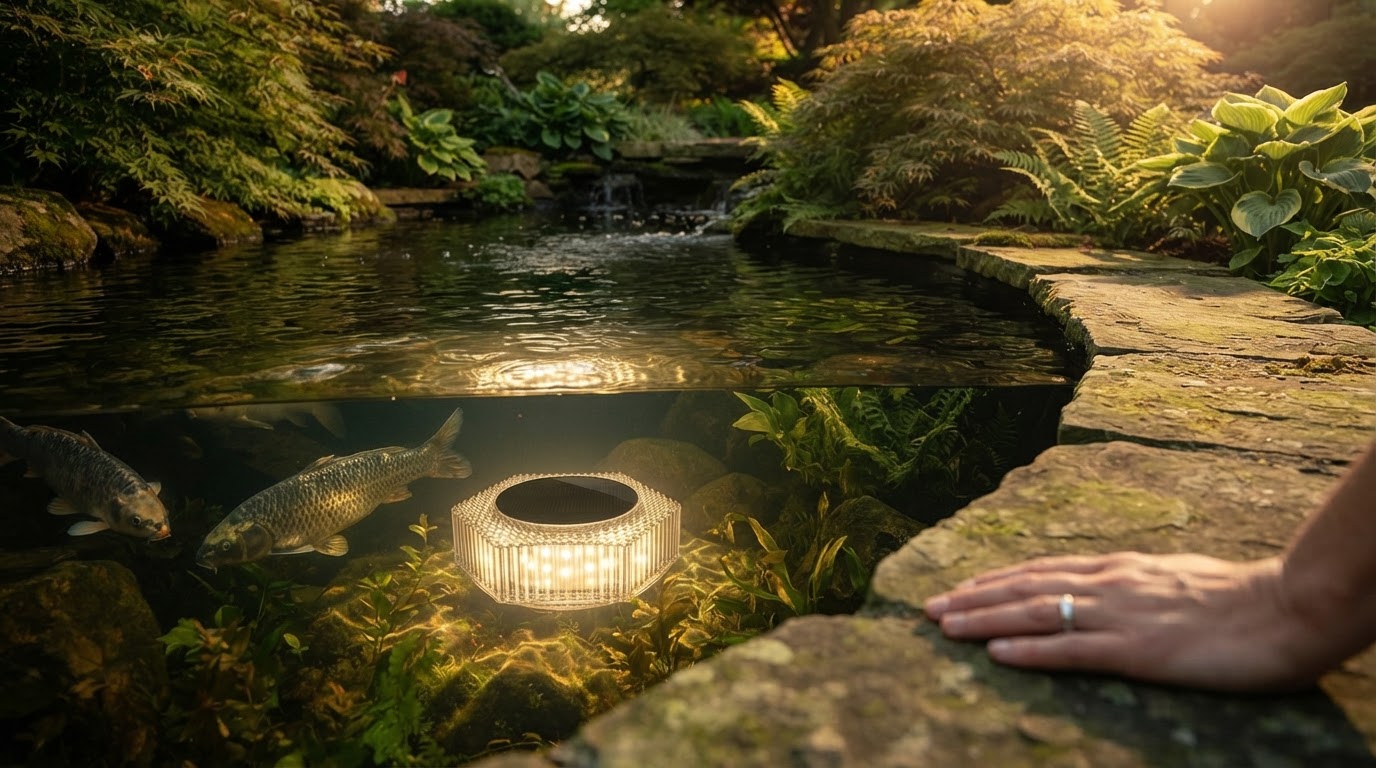
How do Aqua Luminate submersible lights handle pond depth?
 Jordan HaleStaff Writer
August 24, 2026 — Aqua Luminate submersible lights are engineered to withstand the sustained hydrostatic pressure of residential ponds, provided they are installed within their specified IP68 depth ratings to ensure seal integrity.
I remember the evening I first sat by the edge of a deep koi pond, watching the way light fractured through three feet of murky water. The first thing I noticed was how the weight of the water itself seemed to press against the glow, a physical reminder that underwater illumination is a battle against the elements. Homeowners often ask how deep they can truly go before the seals give way or the brightness fades into a dull shimmer.
How does water depth affect Aqua Luminate light performance?
Increased depth creates higher atmospheric pressure that can compromise standard seals, but Aqua Luminate fixtures utilize reinforced gaskets to maintain a dry internal chamber. It turns out that for every foot of depth, the pressure increases, requiring a build quality that matches professional standards. According to The Pond Shop, submersible spotlights are designed specifically to illuminate beneath the surface while waterfall lighting is tuned to highlight ripples and cascades. In my experience, placing a light deeper than four feet requires a high-lumen output to overcome the natural opacity of pond water, which acts as a filter for certain light spectrums. When you are planning an [underwater pond lighting kit](/blog/aqua-luminate-underwater-pond-lighting-kit-logic), the primary concern is not just the waterproofing, but how the beam angle reacts to the density of the water column.
What are the technical requirements for pond light submersion?

Submersible pond lights must carry a verified IP68 rating, signifying they are dust-tight and protected against continuous submersion in water under specific pressure conditions. The industry standard for professional-grade fixtures, as noted by Volt Lighting, includes low voltage LED options that are fully submersible and often rated for specific depths to ensure long-term safety. When I handle these units, I can feel the density of the housing—a necessary bulk that prevents the light from floating or shifting with the current. This weight is crucial when setting up [submersible waterproof led lights for fountain](/blog/submersible-waterproof-led-lights-for-fountain) applications where moving water adds kinetic force to the static pressure. Proper installation involves checking the cord entry points, as these are the most common failure spots if the cable is stretched or kinked during the [outdoor water feature lighting diy](/blog/aqua-luminate-outdoor-water-feature-lighting-diy) process.
Quick answers
Q: Can Aqua Luminate lights be used in chlorinated water? A: While designed for freshwater ponds, these fixtures can typically handle standard residential chlorine levels, though prolonged exposure to high chemical concentrations may degrade specialized seals over a 24-month period.
Q: What is the maximum recommended depth for a standard Aqua Luminate LED? A: Most residential units are optimized for depths up to 5 feet, as the light penetration beyond this point decreases significantly unless high-intensity professional-grade emitters are utilized.
Q: Do these lights require a special transformer for underwater use? A: Yes, Aqua Luminate systems must be connected to a 12V or 24V low-voltage transformer to ensure safety in the event of a housing breach, preventing high-voltage hazards in the water.
Q: How do I prevent algae buildup on the lens? A: Maintaining a regular cleaning schedule every 3 to 6 months is recommended, as bio-film can reduce light output by as much as 40% in nutrient-rich pond environments.
Learn more about Aqua Luminate at https://aqualuminate.com.
Sources
- LED Underwater Pond Light
- Pond Lights & Underwater LED Lighting - The Pond Shop
- Underwater Lighting & Pond Lights