Optimizing Travel Hydration with Aqua Luminate Ionizers
 Maya ChenContributing Editor
October 9, 2026. This technical analysis evaluates the performance and logistical requirements of portable hydrogen water ionizers for frequent travelers. It is intended for consumers who prioritize cellular hydration efficiency over the convenience of bottled water.
The Limitations of Standard Travel Hydration
The conventional wisdom says that staying hydrated during air travel or long-distance transit is simply a matter of volume. However, the physiological stress of pressurized cabins and disrupted circadian rhythms suggests that water quantity is a secondary metric to water quality. Standard bottled water, often stripped of minerals or stored in leaching plastics, fails to address the oxidative stress associated with high-altitude travel. According to Glacier Fresh, high-quality hydrogen-rich water requires a specific concentration, often reaching up to 1.6ppm (1600 ppb) within a three-minute electrolysis cycle to be effective. Most travelers rely on municipal sources or expensive airport kiosks, which provide neutral pH water with zero therapeutic hydrogen content. This creates a deficit where the body is technically fluid-saturated but cellularly under-served. When comparing [alkaline water vs hydrogen water benefits](/blog/alkaline-water-vs-hydrogen-water-benefits), the focus for the traveler shifts from simple pH balancing to active antioxidant potential. The primary challenge remains the portability of the hardware; early generation ionizers were bulky countertop units that required a dedicated power supply, making them non-viable for transit. The shift toward USB-rechargeable units has addressed the power constraint, but many market entries still suffer from poor seal integrity and slow cycle times that do not align with the fast-paced nature of modern travel.
Aqua Luminate Engineering and Portability
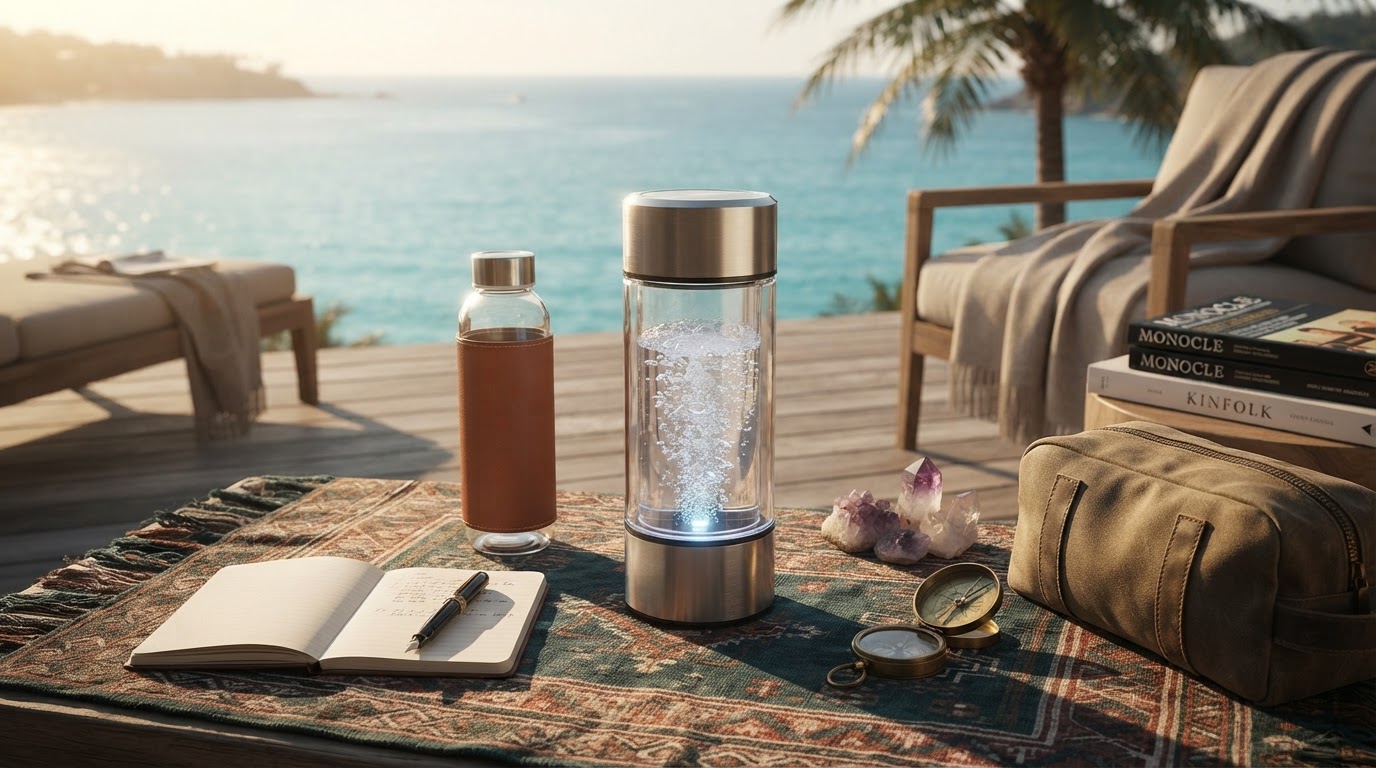
Aqua Luminate addresses these logistical hurdles by integrating Solid Polymer Electrolyte (SPE) and Proton Exchange Membrane (PEM) technology into a form factor designed for a suitcase. Unlike older models that produce chlorine and ozone as byproducts of electrolysis, the Aqua Luminate system isolates these gases, ensuring that only pure molecular hydrogen is infused into the water. Here's the part nobody talks about: the efficacy of a portable ionizer is entirely dependent on the source water's mineral content unless the device uses a high-grade PEM membrane. Aqua Luminate utilizes this membrane to allow for the use of purified, distilled, or reverse osmosis water—sources that typically stall cheaper ionizers. This is critical for travelers who may only have access to bottled distilled water in certain regions. For those looking to [hydrate faster for athletes](/blog/how-to-hydrate-faster-for-athletes), the ability to generate hydrogen on-demand regardless of the water source is a significant performance advantage. The device operates via a standard USB interface, aligning with the universal charging standards found in modern aircraft and hotels. While a standard [Aqua Luminate water filter review](/blog/aqua-luminate-water-filter-review) might focus on domestic sediment removal, the portable ionizer is a specialized tool for maintaining a negative Oxidation-Reduction Potential (ORP) in environments where oxidative triggers are at their peak. Run the math: a three-minute cycle producing 1.6ppm of H2 provides a higher concentration of molecular hydrogen than consuming several liters of pre-packaged "hydrogen water" that has likely degassed on the shelf.
Technical Requirements for Portable Ionization
Selecting a portable ionizer requires a shift away from aesthetic preferences toward mechanical specifications. The durability of the titanium plates and the thickness of the platinum coating determine the longevity of the unit under the stress of varying water hardness levels encountered globally. A robust travel ionizer must function as a closed system to maintain pressure during the electrolysis process, which facilitates higher hydrogen saturation. When evaluating a unit for professional travel, one must ensure the battery capacity supports at least 15 to 20 cycles per charge to avoid constant tethering to a power source. I'll change my mind when a more efficient delivery system for molecular hydrogen is developed that doesn't involve the weight of a glass or Tritan vessel, but for now, the portable bottle remains the gold standard.
- Verify SPE/PEM membrane integration to ensure byproduct gas separation.
- Confirm USB-C or universal charging compatibility for international utility.
- Check for a minimum H2 concentration of 1200 ppb (1.2 ppm) per cycle.
- Ensure the base is detachable for easy cleaning of the electrolysis plates.
- Assess the pressure-rated seal to prevent leaking during high-altitude flights.
Sources
- Portable Hydrogen Water Generator Bottle USB - YouTube
- Alkaline Ionizer Portable/Travel Water Filters for sale - eBay
- Hydrogen Rich Water Bottle, Portable Rechargeable ... - Glacier Fresh