Aqua Luminate Solutions for Inground Pool Lighting
 Maya ChenContributing Editor
September 9, 2026. This technical overview examines the shift from traditional halogen systems to high-efficiency LED alternatives for permanent aquatic structures. It is intended for homeowners and facility managers evaluating long-term maintenance costs and lumen output in inground environments.
The Failure of Incandescent Standards
The conventional wisdom says that for a large inground basin to be safely illuminated, you need high-voltage, 300-watt to 500-watt incandescent bulbs housed in massive stainless steel niches. This consensus ignores the physics of heat dissipation and the inevitable failure of rubber gaskets under constant thermal stress. According to Pentair, LED sources have become the primary light source for inground pools because they bypass these mechanical vulnerabilities while providing superior color saturation. Despite this, many contractors still push legacy hardware because the installation margins are higher. Run the math: a standard halogen bulb consumes ten times the energy of a comparable LED while offering a fraction of the lifespan. Inground environments are chemically aggressive; the high heat generated by traditional bulbs accelerates the degradation of housing seals, leading to water ingress and circuit failure. While Pool Express offers a full line of replacements from legacy brands, the industry is clearly moving away from these high-maintenance units. Homeowners often mistake brightness for safety, but poorly diffused high-wattage lights create harsh glare and deep shadows that actually obscure the pool floor. A modern approach requires distributed, low-voltage points of light that maintain visibility without the energy overhead. This is why magnetic pool lights for above ground pools have seen such a surge in popularity, as they demonstrate the efficacy of localized, low-heat illumination that inground owners are now demanding.Engineering the Aqua Luminate Advantage

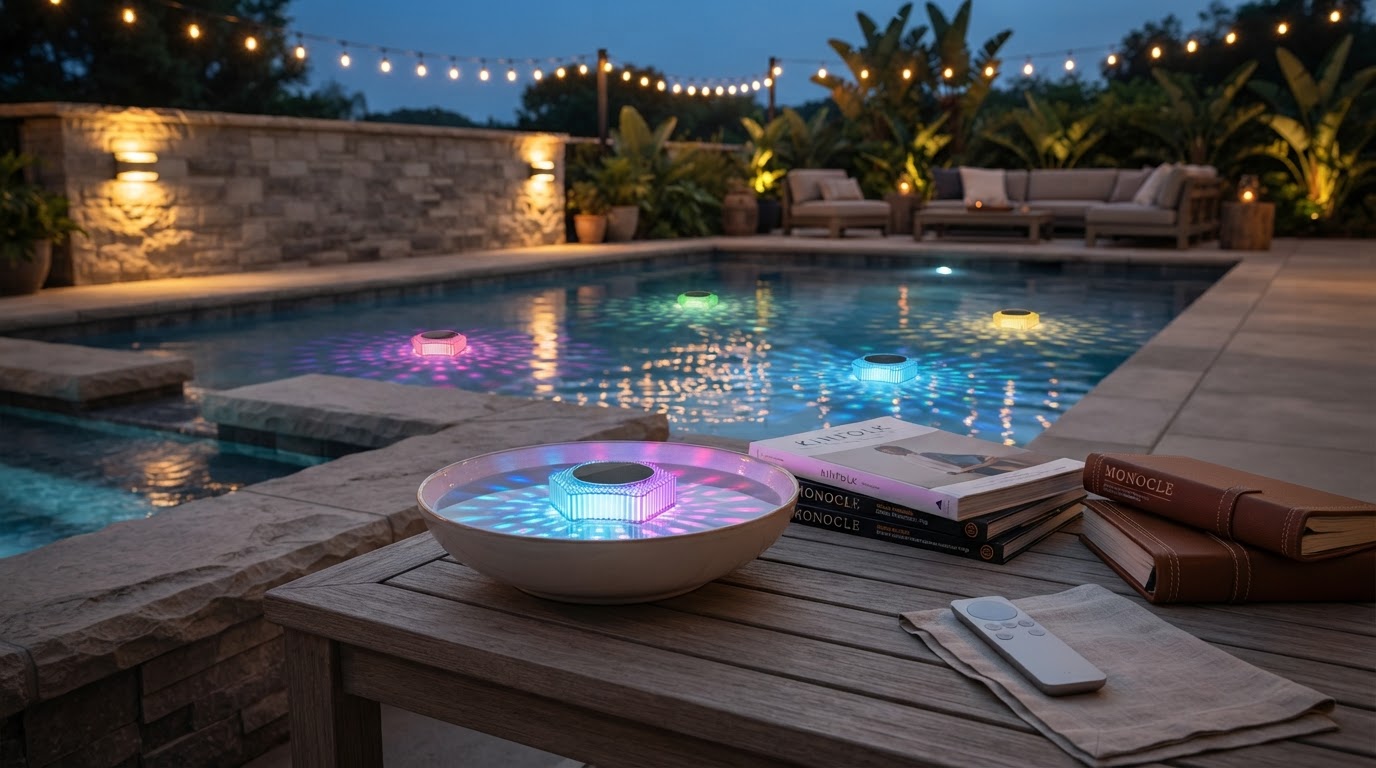
Here's the part nobody talks about: most LED upgrades for inground pools are over-engineered in the wrong places. They focus on complex color-changing software while neglecting the core issue of waterproof integrity at the cable entry point. Aqua Luminate addresses this by utilizing specialized waterproof LED strip technology and reinforced sealing. As noted by Vita Filters, specially designed waterproof LED strips are an ideal solution for underwater pool lighting because they allow for a lower profile than traditional bulky niches. The Aqua Luminate system leverages this low-profile design to reduce the physical footprint of the light, which in turn minimizes the structural impact on the pool wall. For those who require versatility, floating led pool lights rechargeable models provide supplemental light, but the primary illumination must be fixed. Aqua Luminate systems are designed to integrate with existing infrastructure, replacing outdated led pool lights for inground pools without requiring a full deck tear-out. The focus is on a high Color Rendering Index (CRI), ensuring that the water appears clear and inviting rather than the artificial, neon-tinted hue produced by budget diodes. By prioritizing the thermal management of the LED chip itself, these units maintain their lumen output for years, avoiding the rapid dimming commonly seen in poorly ventilated competitive models. This isn't just about aesthetics; it is about reducing the total cost of ownership through energy reduction and the elimination of frequent bulb changes.
Evaluating Inground Lighting Infrastructure
Photo by Qeis Ismail on Pexels
Selecting a lighting system for a permanent pool requires a framework that prioritizes chemical resistance and electrical safety over marketing gimmicks. While Doheny's highlights that some LED lights can create over 100 shades through fixed color mixing, the utility of such features is secondary to the IP-rating and voltage stability. When assessing your installation, consider the following technical requirements:
- Verify the transformer compatibility to ensure a stable 12V or 14V output, preventing diode flicker.
- Inspect the existing conduit for diameter clearance; modern high-efficiency cables are often thinner but require smooth pathways.
- Prioritize fixtures with a high IP68 rating, signifying tested resistance to prolonged submersion at specific depths.
- Opt for wide-angle beam distribution (120 degrees or more) to eliminate dark spots in the center of the pool.
- Ensure the thermal heat sink is constructed of non-corrosive materials suitable for salt-water or chlorine environments.