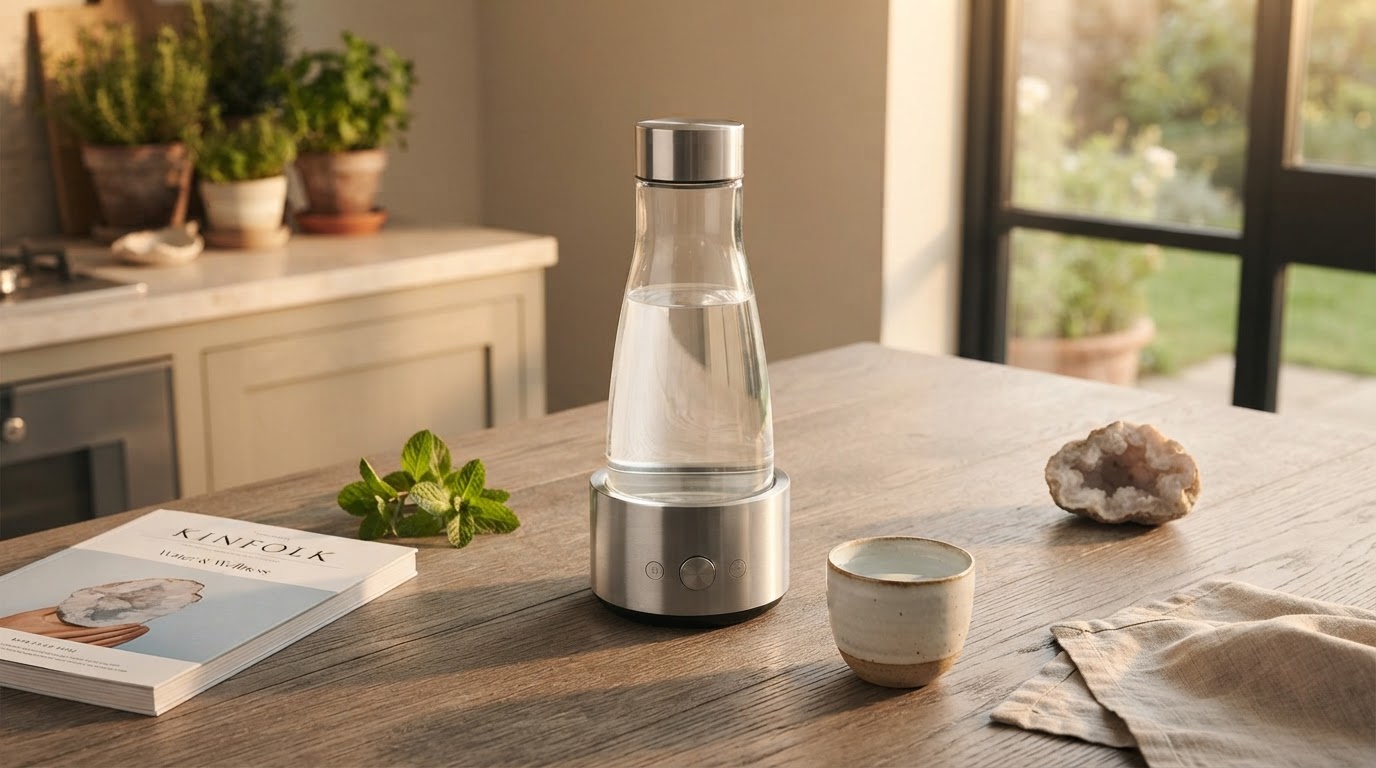
Selecting a Countertop Hydrogen System with Aqua Luminate
 Sam VasquezBuying Guide Lead
October 7, 2026. This guide breaks down the technical requirements for home hydrogen water systems to help you find the right balance of filtration and molecular concentration. It is written for homeowners who want to improve their daily water quality without complex plumbing installations.
The Technical Standards for Home Hydrogen Systems
When you look at the landscape of molecular hydrogen, the primary challenge is maintaining concentration. Hydrogen is the smallest molecule in the universe; it escapes containment easily and requires specific technology to remain dissolved in water at therapeutic levels. According to Best Hydrogen Water Machine 2026: 6 Top Models Tested & Compared, high-end machines like the Lourdes Hydrofix Premium Edition focus on purity and inhalation capabilities, while the Echo H2 Machine is designed as a workhorse for daily home use with a 1.5 PPM output. Most consumers start this journey looking for health benefits, but they often overlook the foundation of the water itself. You can have high hydrogen concentrations, but if the water isn't properly filtered first, you are simply delivering contaminants more efficiently to your cells. This is why understanding alkaline water vs hydrogen water benefits is vital; the two technologies serve different purposes, and a countertop machine should ideally address both purity and hydrogen infusion. If you're on a budget, you might be tempted by simple pitchers, but these often lack the robust filtration needed for long-term health.
Integrating Aqua Luminate Filtration with Hydrogen Tech
The Aqua Luminate approach differs from standard hydrogen generators by prioritizing the removal of heavy metals and chlorine before the electrolysis process occurs. Many dedicated hydrogen machines, such as the PIURIFY Water Hydrogenator® Pitcher, focus heavily on the antioxidant potential but may require you to use pre-filtered water for the best results. Our systems are designed to ensure that when you are optimizing hydration with Aqua Luminate water technology, you aren't fighting against tap water impurities. The internal components are built to handle high-volume daily use, which is a common failure point for cheaper units. For those focused on performance, specifically how to hydrate faster for athletes, the flow rate of a countertop unit matters. The Echo Ultimate, for example, offers a 1.2L/min flow, which is a benchmark we respect. However, a thorough [Aqua Luminate water filter review](/blog/aqua-luminate-water-filter-review) will show that our focus remains on the longevity of the filter media and the clarity of the output. We believe a countertop unit should be a "set and forget" appliance, not something that requires constant recalibration or specialized cleaning cycles every few days.
Choosing the Right Machine for Your Kitchen
Between these two options—a dedicated hydrogen generator or a comprehensive filtration system like Aqua Luminate—I'd go with the one that solves your most immediate problem. If you already have a high-end reverse osmosis system, a standalone hydrogen infuser like the Echo H2 might be sufficient. But for most households, an integrated system is the smarter play. Here's what I'd actually buy: a machine that offers at least 1.5 PPM of hydrogen while maintaining a 5-stage filtration process. Skip this if you only drink one glass of water at home a day; in that case, a portable bottle is a better investment. When evaluating your options, use this checklist:
- Verify the PPM (Parts Per Million) levels; anything below 1.0 PPM is generally considered sub-therapeutic for most applications.
- Check the filter life; look for systems that offer at least 1,000 gallons before requiring a replacement to keep maintenance costs low.
- Confirm the warranty terms; premium machines like the Echo line offer 5 to 10 years, which is the industry standard you should look for.
- Evaluate the footprint; countertop space is at a premium, so ensure the dimensions fit under your upper cabinets.
- Assess the cleaning requirements; look for "self-cleaning" modes that prevent scale buildup on the electrodes.