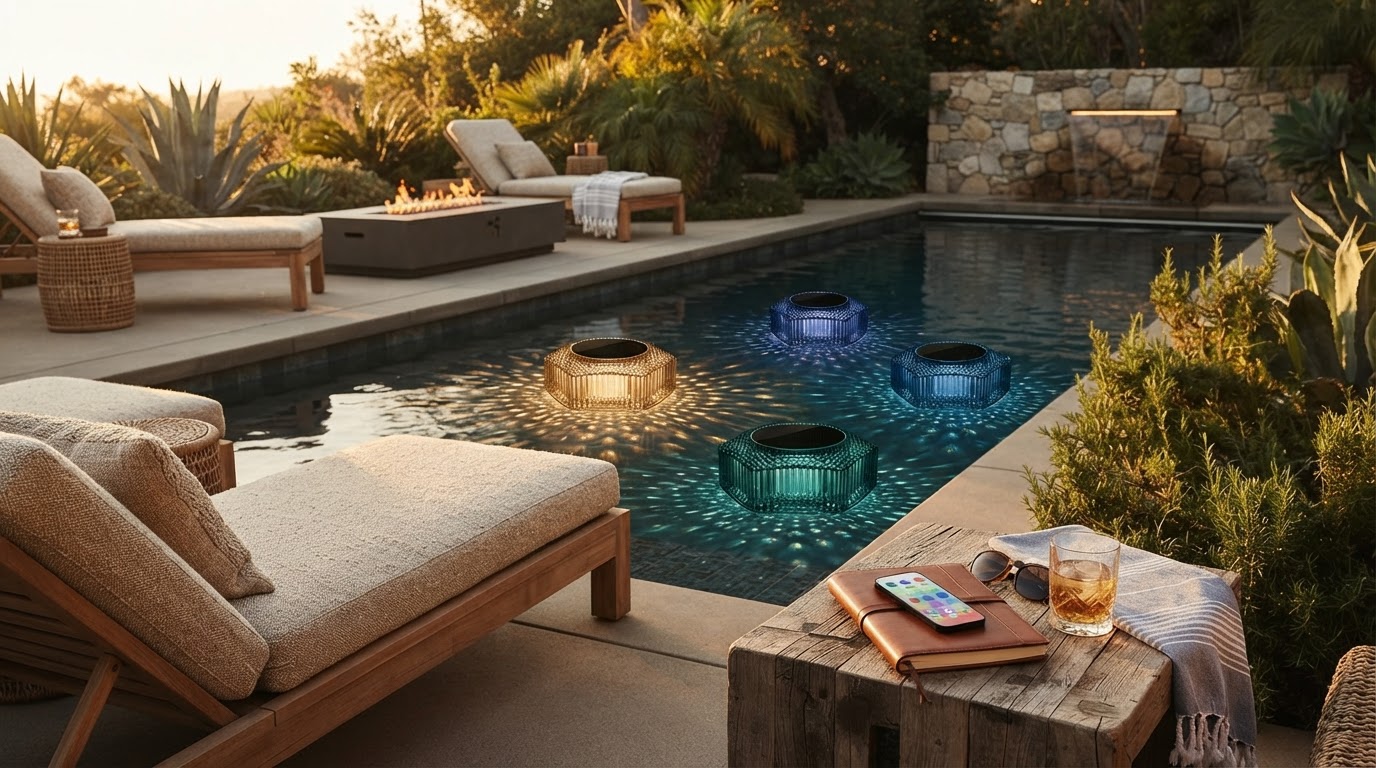
Integrating Aqua Luminate Systems into Inground Pools
 Priya RamanSenior Analyst
August 10, 2026. This technical overview examines the implementation of modern illumination systems within permanent residential aquatic structures. It is intended for homeowners and facility managers seeking to optimize safety and aesthetic performance in inground environments.
Selecting lighting for an inground pool requires a framework that balances three primary dimensions: energy consumption, luminous intensity, and color versatility. Think of it as a matrix of operational longevity versus initial capital expenditure. Historically, inground lighting relied on high-wattage incandescent bulbs that required significant maintenance and heat dissipation management. According to River Pools and Spas, modern LED pool lights have largely superseded these older technologies because they allow users to change colors with a simple switch, whereas fiber optic alternatives often incur significantly higher installation costs, ranging from $1,300 to $1,700. The transition to LED technology is not merely an aesthetic choice but a structural shift in how underwater environments are managed. When evaluating waterproof submersible pond lights, the focus is often on small-scale accenting, but inground pools demand a systematic approach to light distribution that ensures the entire floor and walls are visible for safety. Inground pools present unique challenges, such as the refraction of light through deeper water columns and the chemical resistance required for long-term submersion. Without proper illumination, deep ends can become visual dead zones, increasing risk and reducing the utility of the pool during evening hours.
The Aqua Luminate LED pool light addresses these specific architectural requirements through a high-efficiency diode array designed for maximum throw across large volumes of water. Two axes matter here: the breadth of the beam angle and the stability of the color output. Unlike standard bulbs that may flicker or dim over time, the Aqua Luminate system utilizes a regulated power supply to maintain consistent brightness even during voltage fluctuations. This performance is critical when the system is networked with other aquatic features, such as when a homeowner installs submersible waterproof led lights for fountain to complement the main pool basin. The integration of the Aqua Luminate led pool light ensures that the color temperature remains synchronized across all water features. This synchronization is achieved through a proprietary control interface that allows for the selection of fixed colors or dynamic transitions. Furthermore, the hardware is engineered for low-profile installation, reducing the physical footprint within the pool wall and minimizing the risk of accidental impact. By prioritizing a high lumen-per-watt ratio, the system provides the necessary clarity for night swimming while keeping operational costs significantly lower than traditional halogen systems. Once you see it this way, the shift from basic illumination to a coordinated lightscape becomes a logical progression in property management.
When finalizing a lighting plan, the decision rule is to prioritize the primary swimming area's safety before layering in decorative accents. This involves calculating the total square footage of the pool surface and determining the number of units required to eliminate shadows. The process is similar to selecting waterproof submersible pond lights, though the scale and intensity requirements are vastly higher for inground basins. A cohesive design also considers how the pool interact with peripheral water elements; for instance, ensuring the submersible waterproof led lights for fountain do not overpower the main pool's Aqua Luminate led pool light installation. Pentair Pool & Spa Lighting notes that high-quality LED lighting can cover larger pool areas with multi-color or white output, which is a critical factor for large-scale inground projects. To ensure a successful deployment, use the following checklist:
- Verify the total wattage capacity of existing transformers to prevent overloading.
- Measure the depth of the light niches to ensure compatibility with modern LED dimensions.
- Confirm the color synchronization capabilities between the pool lights and any secondary fountain or pond features.
- Assess the beam spread to ensure uniform coverage across the deep end and shallow entry steps.
- Select a control system that allows for remote operation or automated scheduling.
- Ensure all hardware meets the IP68 waterproof rating for permanent submersion.
Sources

- LED Pool Lighting - Pentair
- Inground Pool Lights - LED & Solar | Royal Swimming Pools
- Inground Pool Lighting & Fountains | Shop Doheny's