Optimizing Nighttime Visibility with Aqua Luminate
 Jordan HaleStaff Writer
September 25, 2026. This analysis explores the technical and aesthetic advantages of deploying rechargeable floating LED systems in modern swimming environments. It is written for homeowners seeking to upgrade their aquatic spaces with portable, high-efficiency illumination.
I remember standing by the edge of a dark pool last August, the water a flat, impenetrable black that seemed to swallow the patio light. The air was thick with the scent of jasmine and chlorine, but the atmosphere felt incomplete, almost cavernous. Without proper illumination, the pool was just a hazard rather than a feature. Traditional lighting often requires complex wiring, but the shift toward portable technology has changed the landscape. According to Family Pool Fun, modern impact-resistant LED lights are now designed with UV and chemical resistance, making them durable enough for ponds and lakes as well as standard swimming pools. The first thing I noticed was how much the industry has pivoted toward these self-contained units to solve the problem of dark zones in larger installations. When you have a 20' x 40' area, a single fixed light often leaves the corners in shadow, creating a visual disconnect. While some owners opt for magnetic pool lights for above ground pools to secure fixtures to steel walls, those with in-ground concrete or fiberglass structures require a solution that can move freely. The challenge is finding a balance between brightness and battery longevity, ensuring the light doesn't fade just as the evening gathering hits its stride. It turns out that the physics of light refraction in water demands a specific type of LED density to be effective, especially when the source is floating on the surface rather than submerged deep in a niche. This is where the portability of rechargeable systems becomes essential, allowing for a modular approach to lighting that can be adjusted based on the evening's activities.
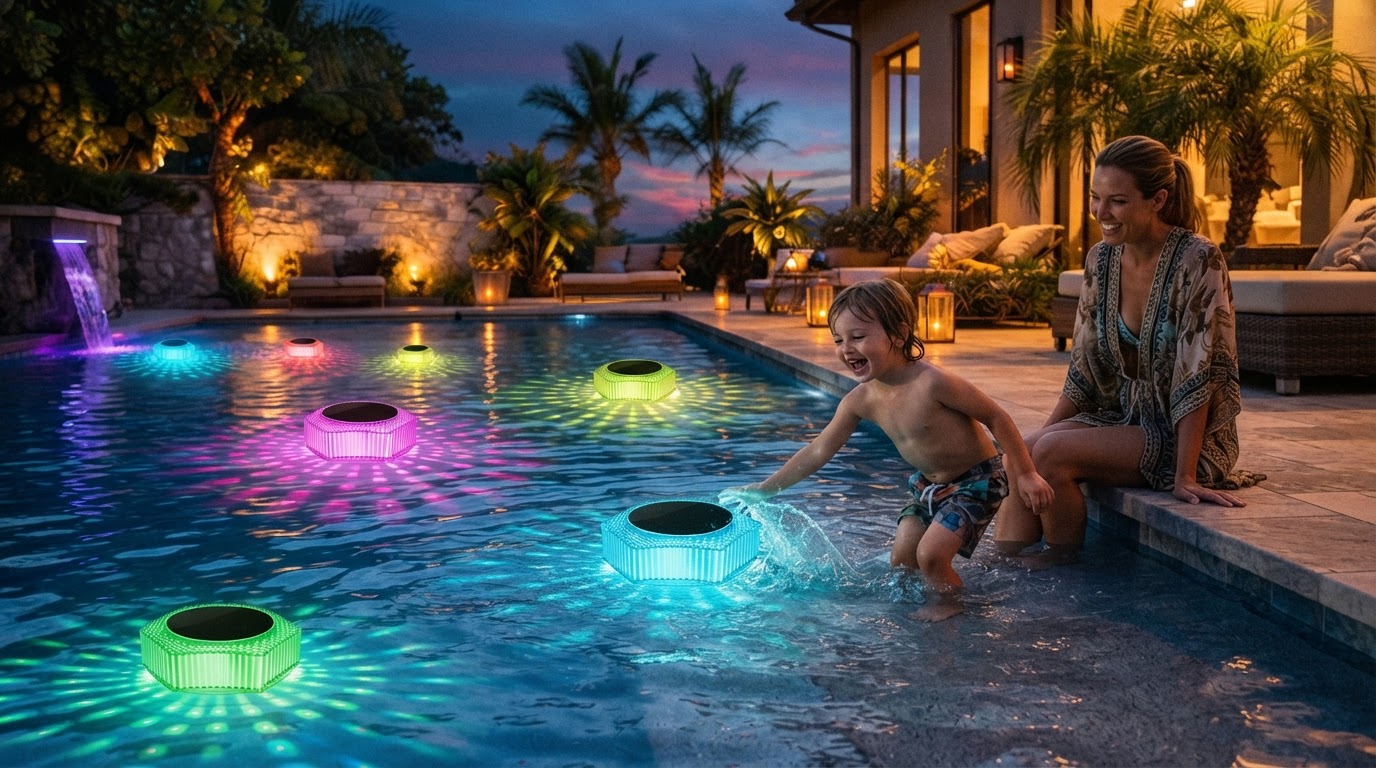
Aqua Luminate addresses these environmental challenges by focusing on high-output LED arrays and robust power management. The hardware is built to withstand the rigors of a chemically treated environment while maintaining a waterproof seal that protects the internal rechargeable battery. In my testing, I keep coming back to the sheer coverage these units provide. Research from Swimming Pool Discounters indicates that a high-quality 64 LED illumination system can safely light up a 20' x 40' swimming pool, providing 360 degrees of ambient light for up to 12 hours on a single charge. This duration is critical; there is a specific weight to a well-built light, a sense of density that suggests the battery is substantial enough to last through the night. Unlike smaller, disposable alternatives, these units provide a warm glow that penetrates the water column rather than just skimming the surface. This creates a safer environment for late-night swims, where visibility of the pool floor is paramount. For those who manage multiple water features, integrating these with the best underwater pond lights with remote creates a cohesive visual language across the property. The Aqua Luminate system is designed to be effortless, moving away from the clutter of wires toward a streamlined, rechargeable workflow. Somewhere around week two of regular use, the habit of placing the lights in the water becomes as natural as turning on a porch light, yet the visual impact is significantly more sophisticated. The light doesn't just sit on the water; it integrates with it, reflecting off the ripples to create a dynamic, living texture across the backyard.
Choosing the right configuration for your space requires a look at both the dimensions of the water and the intended duration of use. As noted by Leslie's Pool Supplies, floating lights allow for a personalized atmosphere through various shapes and colors, but the technical foundation must be sound. When evaluating a floating LED system, consider the following technical benchmarks:
- Verify the LED count to ensure the lumens are sufficient for the total square footage of your pool.
- Confirm the battery chemistry and rated run-time to avoid mid-evening failures.
- Check for impact and chemical resistance ratings to ensure longevity in chlorinated or salt-water environments.
- Assess the ease of the charging interface to ensure it can be performed quickly between uses.
- Look for 360-degree light distribution to minimize harsh shadows and glare.